When Moving a Tree Beats Removing It
A driveway has to go through, a patio addition is on the plans, or a tree was planted in the wrong spot years ago and has outgrown it. The usual answer is to remove it and plant a sapling. A mature tree already gives you shade and size that a new planting won't match for decades, and moving it keeps that.
Some trees shouldn't be moved. If a tree is already stressed, diseased, or sitting in poor soil, moving it just relocates the problem. We evaluate each tree before committing to anything, and if removal is the smarter call, we'll tell you.
What We Check Before We Quote
Moving an established tree means cutting its root system down to a ball you can lift, so what we find before digging decides how the job goes. We measure the trunk diameter to size the root ball. A bigger trunk means a heavier ball and a more complicated move.
We look at both sites, the one the tree is leaving and the one it's going to. A tree that sits in standing water after rain will struggle in its new spot. Street flooding is Hanford's main flood problem, so we check both sites for standing water and drainage limits, and we check them again after a storm before staging equipment or hauling anything. We also check that the grapple truck can get in and that the new site has the sun and room the species needs.
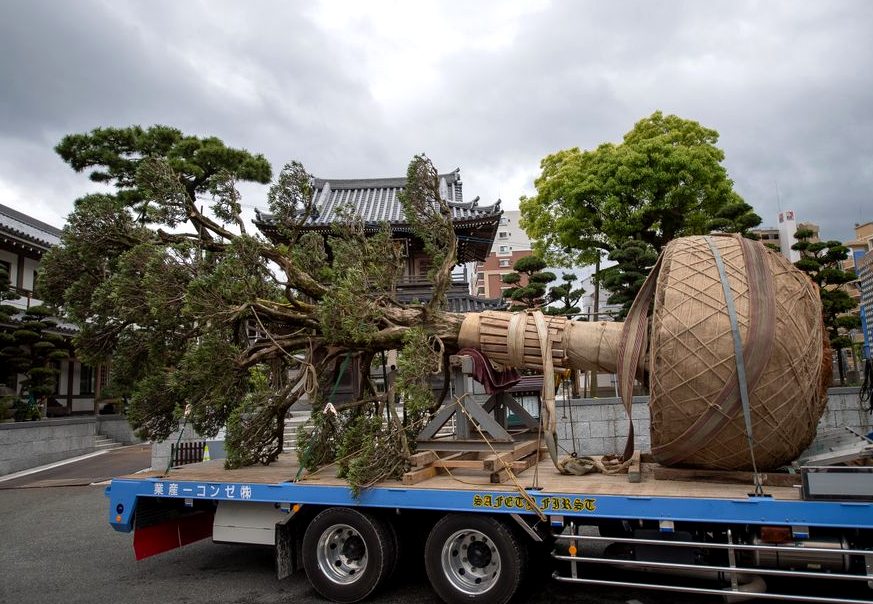
How the Move Works
Once the tree is a good candidate and both sites are workable, we dig and wrap the root ball, lift it onto the grapple truck, and haul it to the new hole. On larger trees we install EHS tree-support cables after planting, so the tree stays upright while new roots grow out into the surrounding soil. A freshly moved tree with a small root ball and a big canopy is the one that goes over in the first strong wind.
On site, anyone working from an aerial lift has their fall-protection harness attached to the designated point. Chipper guards stay in place, nobody reaches into a running chipper, and a jam gets locked out before it's cleared.
Timing the Move Around Hanford's Weather
July highs here average close to 98°F. A tree that has just lost part of its root system can't keep up with that heat, so we avoid summer digs. January lows average about 40°F, and with a seasonal swing of roughly 57°F, the cooler months give a moved tree the easiest conditions for rooting in.
If the tree work is part of a development project, the city's requirements apply. Hanford currently works from the 2025 editions of California's building and related state codes, and we check what applies to your project before we start.
What Transplanting Costs
Transplanting runs $300 to $1000 per tree. Trunk size drives most of that, since a larger trunk means a heavier root ball and more labor to lift it. Distance between the two sites matters too. Tight staging areas, sloping ground, or limited truck access push a job toward the high end.
We quote after we've seen both sites. If the ground turns out to be more complicated than expected, you hear about it before we commit to a price.
Getting Started
If you have a tree in the wrong place and want to know whether a move is realistic, call us. We'll look at the tree and both sites and tell you plainly whether it's worth moving. If it is, we handle the digging, the lift, the haul, and the cabling.
How It Works
-
Tell Us What You Need
Tell us what you need done and when — you'll get a straight answer, not a sales pitch.
-
We Walk the Job
We come out, look at the space, and confirm exactly what the job involves.
-
Know the Price First
You get the scope and the price in writing before any work starts. No surprises.
-
The Job, Done Right
We do the job right the first time, clean up after ourselves, and stand behind the work.
Depending on what we find, that can mean:
- Inspect the tree and limbs for structural weakness before climbing or cutting.
- Set up a controlled work zone and keep nonessential workers outside the expected drop zone.
What It Typically Costs
Ranges to budget around - every situation is priced on its own specifics.
$30–$1600
$50–$100
Our Service Area
We work across Hanford, CA. Call (559) 794-9788 to confirm coverage for your address.