What happens if you leave the stump
A live stump often sends up sprouts from the base and roots, and you end up cutting back new growth from a tree you already took down. Our soil here is mostly Tulare, which is somewhat poorly drained, so a stump sitting in it stays wet. Wet wood rots, and soft rotting wood draws insects. Meanwhile the stump dulls your mower blade, breaks up the lawn, and sits in the exact spot where you'll want a patio, bed, or fence post. The roots underneath take years to break down, and until they do, new plantings have to work around them.
What stump grinding does
We run a stump grinder, which chips the wood away in layers until the stump is several inches below the surface. The grindings go back into the hole and make usable fill. Top it with soil and seed, or plant over it once it has settled. The grinder doesn't pull the whole root system. Roots below grade keep decaying slowly and won't bother a lawn or shallow planting. Grinding gets rid of the part you trip over and mow around, and it leaves you a flat, usable surface.
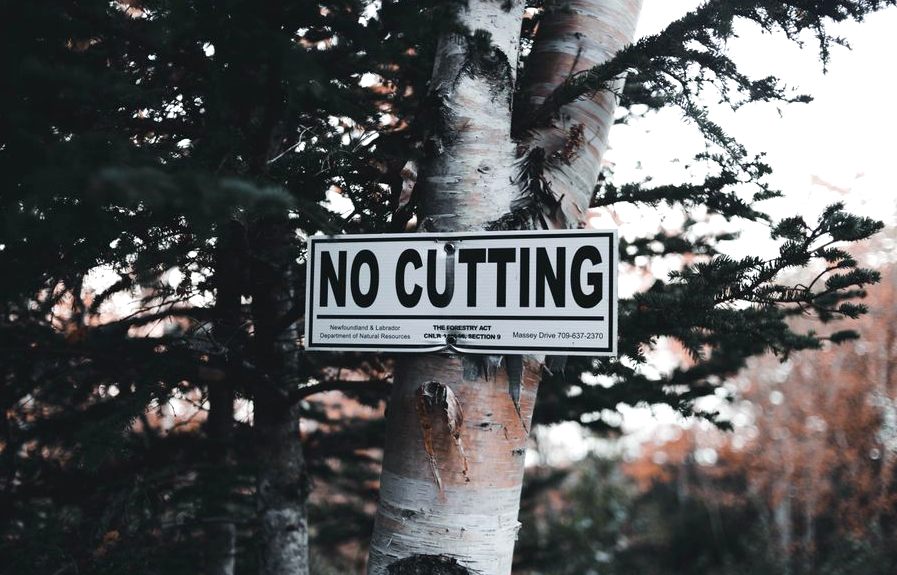
What changes the job
Size is the obvious factor. Access matters just as much. A grinder that fits through a side gate is a different job from one that has to cross a finished landscape bed or squeeze past a fence. Old, dried-out stumps are also harder on the cutting teeth than a fresh one, so age affects the time. Grinding is priced separately from removal, which is quoted per tree with the stump excluded. If the tree is still standing, have us quote both together, so the grinder comes while the crew is already on site and you avoid a second trip.
Older Hanford yards
The median home here was built in 1986, so a lot of the trees in these yards were planted with the house and are now going on four decades old. Stumps from trees that age are wide, with heavy root masses that run toward fences, slabs, and walkways. Tell us where the nearest hardscape sits, and where any irrigation or buried lines run, before we set up the grinder. Winter freezes here are occasional and light, so we can generally grind through the cooler months instead of waiting for spring.
When to leave a stump alone
A stump at the back edge of a lot, away from the lawn and any future project, can stay. It will rot down into the soil over time. Grind it if it sits in an area you use, blocks a planned lawn, fence, shed, or bed, or has started to crumble and draw insects. If you're unsure, grinding right after removal is easiest, because the site is already open and cleared.
Getting a price
A fresh stump from a recent removal is a different job from a fifteen-year-old oak that keeps throwing up shoots. We price grinding after seeing the stump's size, the wood's condition, and how we can reach it. If other trees on the property need work, mention it too. Cabling a mature tree with a weak union runs $200 to $400 per tree, and deep-root fertilization for a tree that's struggling runs $100 to $350. Send your address and a description or photo of what you have, and we'll quote what's actually there.
See the Work
A visual look at what the service involves.


How It Works
-
Tell Us What You Need
Tell us what you need done and when — you'll get a straight answer, not a sales pitch.
-
We Walk the Job
We come out, look at the space, and confirm exactly what the job involves.
-
Know the Price First
You get the scope and the price in writing before any work starts. No surprises.
-
The Job, Done Right
We do the job right the first time, clean up after ourselves, and stand behind the work.
Depending on what we find, that can mean:
- If workers cannot maintain at least 10 feet from electrical lines, contact the utility to de-energize and ground them.
- For a heavy limb, make an underside notch cut, cut through the limb farther out to remove its weight, then remove the stub just outside the branch collar.
Our Service Area
We work across Hanford, CA. Call (559) 794-9788 to confirm coverage for your address.
Also Available
Why Hanford {Who} Call
Updated October 2026