What People Notice First
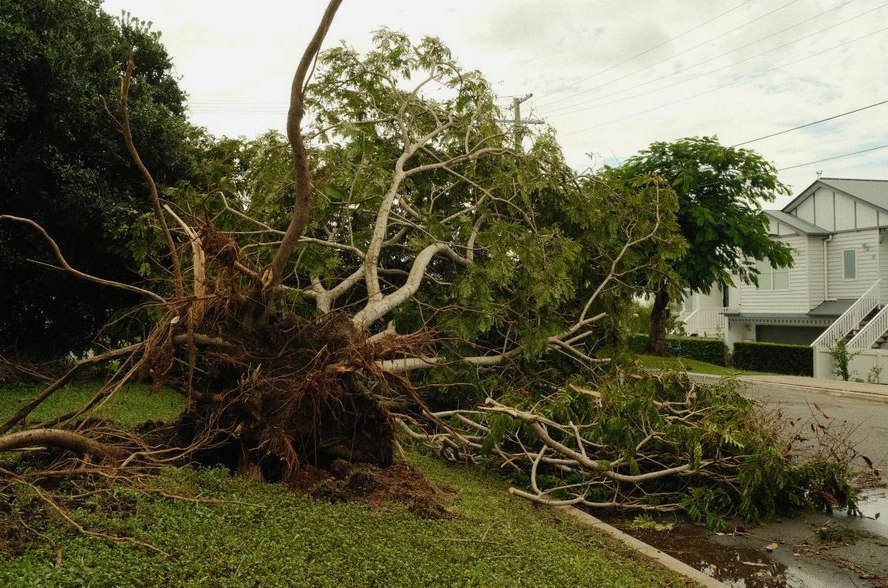
The signs are usually visible from the ground. A lean that wasn't there last summer. A crack running up the trunk, or a fork that has opened wider than it used to be. Dead limbs hanging in the canopy, especially over the roof or driveway. A tree that leafed out thin on one side and full on the other. Sometimes there's nothing to see, just the creak a limb makes in the wind, or a branch that dropped on a calm afternoon, which is the one that gets people calling the same day.
Hanford swings from January lows around 40.6°F to July highs near 97.7°F, so we get these calls year-round, not just after a storm. If you're standing in the yard trying to decide whether you're overreacting, a leaning, cracked, or deadwooded tree over your house is reason enough to call.
What's Going On Inside
The trunk you can see is only the outer part of the story. Hollow, cracked, or decayed wood carries far less than the canopy above it assumes, and the tree gives no warning. Two trees that look the same from the street can be very different jobs once we're into them.
A hollow center under what looked like solid wood is the most common surprise on the job. When it turns up, the plan can change mid-cut: smaller pieces, different rigging, a different spot for the wood to land.
How We Read the Tree and the Site
Before anything gets cut, we assess the tree and the work area. On the tree, we look at how it leans, where the splits are, which way the weight sits, and how much of it is sound. On the site, we look at what's underneath, what's in the way, and where the wood can safely land.
Then we set a retreat path, the line each of us walks if something goes sideways, and we settle it before a saw starts. We also control access around the operation, which means keeping people, pets, and vehicles out of the work zone. That can mean your driveway or a walkway is closed while we work, and we'll tell you before we start.
If limbs hang over the roof, or the tree sits where climbing isn't the smart way in, we use an aerial lift. Anyone working in the tree is tied in with a work-positioning lanyard.
Taking It Down, and When We Don't
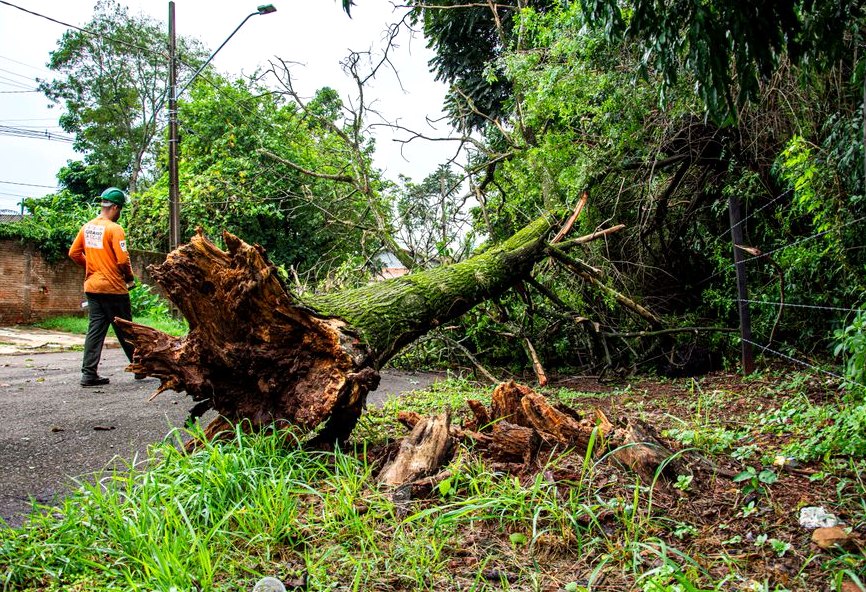
The take-down is a series of controlled cuts that remove the weight in pieces, with the direction of each piece decided before the cut is made.
Removal isn't always the answer. If a tree is worth keeping and the problem is a weak fork or a split that hasn't failed yet, cabling can support it. Cabling can't help a tree whose trunk is hollow or whose roots are failing. If yours is in that shape, we'll say so rather than sell you a cable.
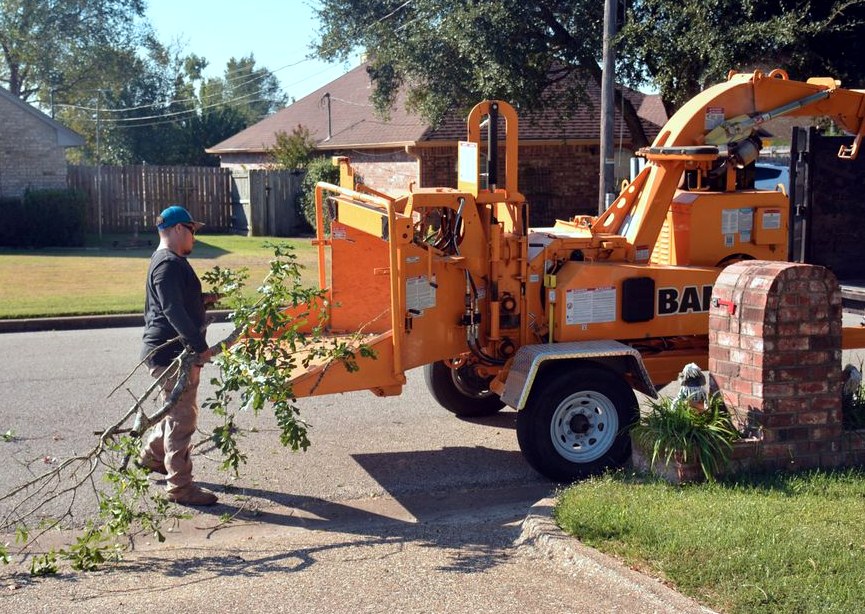
After a take-down we grind the stump below ground level. Grinding does not remove the underground roots. They stay in the ground and break down over time, so keep that in mind if you plan to plant or pave over the spot.
What It Costs and Who to Hire
Cabling runs $200–$400 per tree. Removal depends on the tree and the site, so we look at both before we quote, and a firm removal price over the phone is a guess.
When you compare crews, listen to the walk-through. A good one covers where the wood is going, how they'll keep you and your car out of the work zone, how they get into the tree, and what happens to the stump. Ask what they do about the roots after grinding. The honest answer is that the stump goes below grade and the roots stay.
See the Work
A visual look at what the service involves.

How It Works
-
Tell Us What You Need
Tell us what you need done and when — you'll get a straight answer, not a sales pitch.
-
We Walk the Job
We come out, look at the space, and confirm exactly what the job involves.
-
Know the Price First
You get the scope and the price in writing before any work starts. No surprises.
-
The Job, Done Right
We do the job right the first time, clean up after ourselves, and stand behind the work.
Depending on what we find, that can mean:
- Make pruning cuts outside the branch bark ridge and branch collar; avoid flush cuts that damage stem tissue.
- For tree felling, assess the tree and work area, determine a retreat path, and control access around the operation.
What It Typically Costs
Ranges to budget around - every situation is priced on its own specifics.
$100–$300
$75–$250
Our Service Area
We work across Hanford, CA. Call (559) 794-9788 to confirm coverage for your address.