When You Need This Done Now
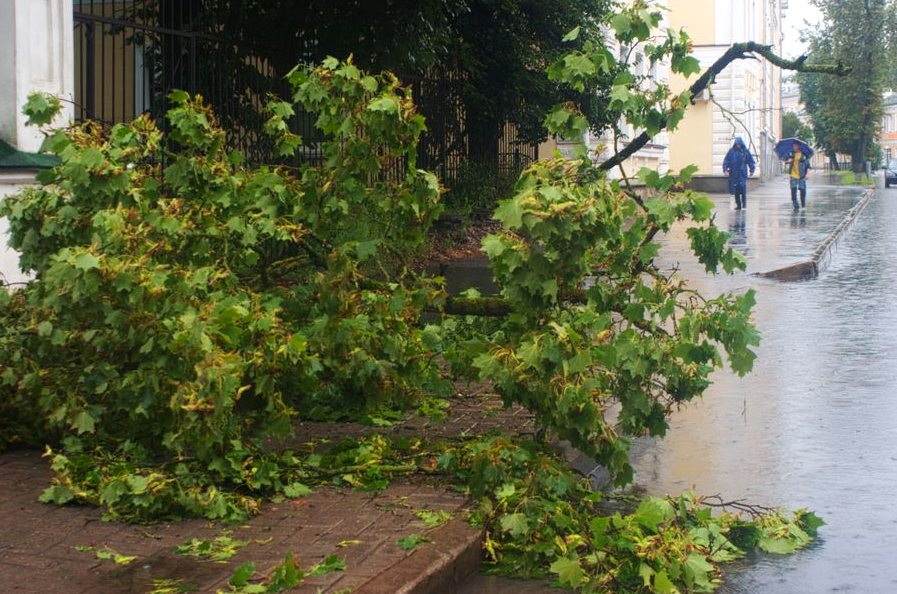
A tree doesn't have to be on the ground to be an emergency. We get calls about a large limb that has cracked and hangs by a strip of bark, swinging over a yard or driveway. We get calls about a tree that leaned after a storm and now presses against a house, garage, or fence. We also get calls after a tree has already landed on a structure or vehicle, or across a street.
The common thread is that the situation is either getting worse or has already done damage. A tree sitting on a roof gets harder to remove the longer it stays, because the load shifts and the wood dries and binds. If you can't tell whether yours qualifies, describe what you're seeing and we'll tell you whether it needs a crew now or can wait for a regular appointment.
What Makes a Tree Fail Suddenly
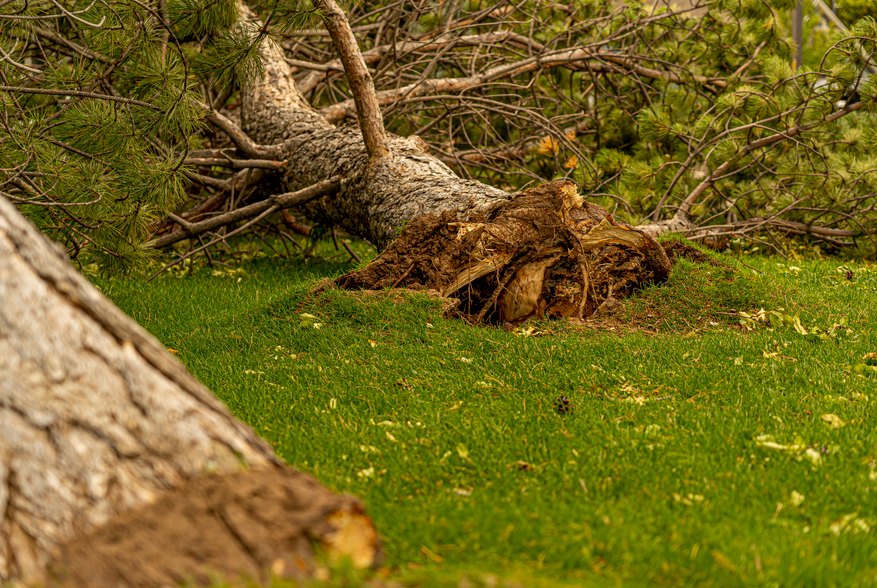
Most sudden failures have been building for a long time. Decayed roots and splits in the trunk or major limbs are the usual causes, and a storm is often just the moment they give out. Weakened roots can't hold a tree against a gust. A trunk that has cracked can look fine from the street while the damage runs well inside it.
Rain matters here. Hanford gets about 11 inches a year, nearly all of it in the rainy season. January is the wettest month at about 2.2 inches, and August is close to dry. Winter is when a weakened tree gets tested, and a tree that stood through the dry months can be the one that comes down once the weather turns.
How We Handle an Emergency Take-Down
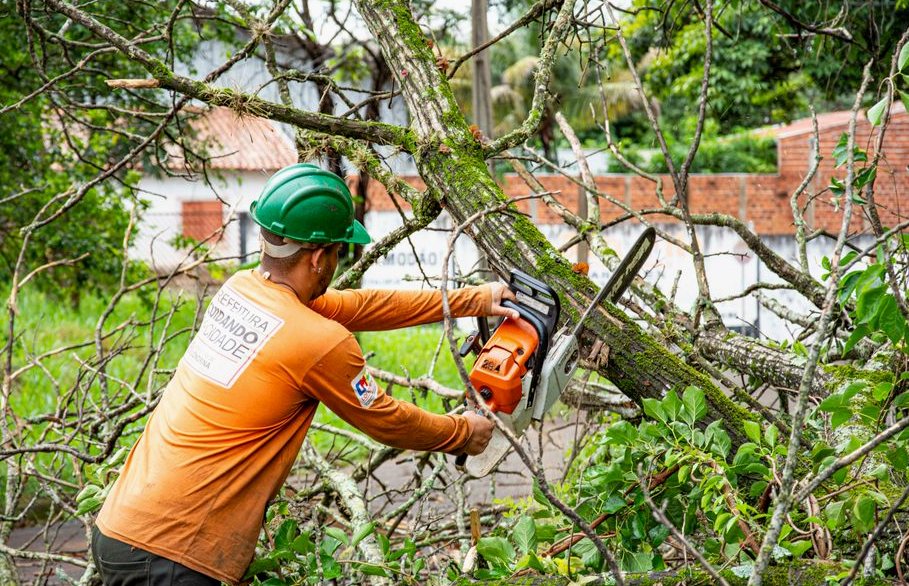
We secure the site before we start a saw. Before anyone goes up, we brief the whole crew on the hazards at that specific job: which parts of the tree are unstable, what's under it, and where the pieces will go. We set up communication between the climber or the person in the aerial lift and the ground crew, so no one moves rigging without the other side knowing. We mark a drop zone, and ground workers stay out of it while overhead work is going on.
The rigging is the same as on any removal: controlled cuts, sections roped down, nothing dropped where it might land. What changes is the order. We first take pressure off whatever the tree is leaning on or lying across, then work through the rest. The aerial lift gets us into the crown without trusting a cracked or leaning tree to hold a climber, and where a climber does work in the tree, a work-positioning lanyard keeps them secured while both hands are on the saw.
What It Costs to Remove One Tree
A single tree removal runs $450 to $1450, with the stump not included. Where a job lands in that range depends on the size of the tree, how easily we can reach it, and what is under or beside it. A tree lying across an open driveway can be cut up and hauled off. A tree leaning on a roof has to be taken apart from the top down, with every section lowered on a rope, and that takes more time and more people.
We give you a price once we've seen the tree, and we tell you before we start if what we find changes it.
If You Have a Dangerous Tree Right Now
Keep people and pets away from the tree and out of the area it could fall into. Don't try to cut up a storm-damaged tree yourself; the wood is under tension and can move without warning. If the tree is in or near power lines, call the utility first and stay well back.
Then call us. Tell us what the tree is touching, how big it is, and whether it's still moving. From that we can tell you how soon we can get a crew out and what the job is likely to cost.
See the Work
A visual look at what the service involves.

How It Works
-
Tell Us What You Need
Tell us what you need done and when — you'll get a straight answer, not a sales pitch.
-
We Walk the Job
We come out, look at the space, and confirm exactly what the job involves.
-
Know the Price First
You get the scope and the price in writing before any work starts. No surprises.
-
The Job, Done Right
We do the job right the first time, clean up after ourselves, and stand behind the work.
Depending on what we find, that can mean:
- Mark a drop zone and keep ground workers out of it during overhead work.
- Inspect climbing and fall-protection equipment before use, and remove damaged or worn equipment from service.
What It Typically Costs
Ranges to budget around - every situation is priced on its own specifics.
$100–$300
$75–$250
Our Service Area
We work across Hanford, CA. Call (559) 794-9788 to confirm coverage for your address.