Checking the Spot First
We look at drainage, how much room the roots have, and what is overhead and underground before we agree on a location. Foundations, sidewalks and buried lines limit how far roots can spread. Branches and power lines limit how high the crown can go.
If the spot you picked won't work, we say so and suggest another. A tree moved a few feet at the planning stage costs nothing. A tree that has to come out in five years costs a lot.
Choosing the Tree
Start with what you want the tree to do: shade a patio, screen a property line, or fill a gap. Then match the species to the site and the climate. Hanford's January average low is 40.6 °F and its July average high is 97.7 °F, a swing of about 57 degrees. A new tree has to get through that summer heat with a root system still the size of its nursery pot, so we favor species that handle heat and don't need constant extra water once they're established.
If you want something that is a poor fit for the site, we tell you why before you buy it.
Planting It Right
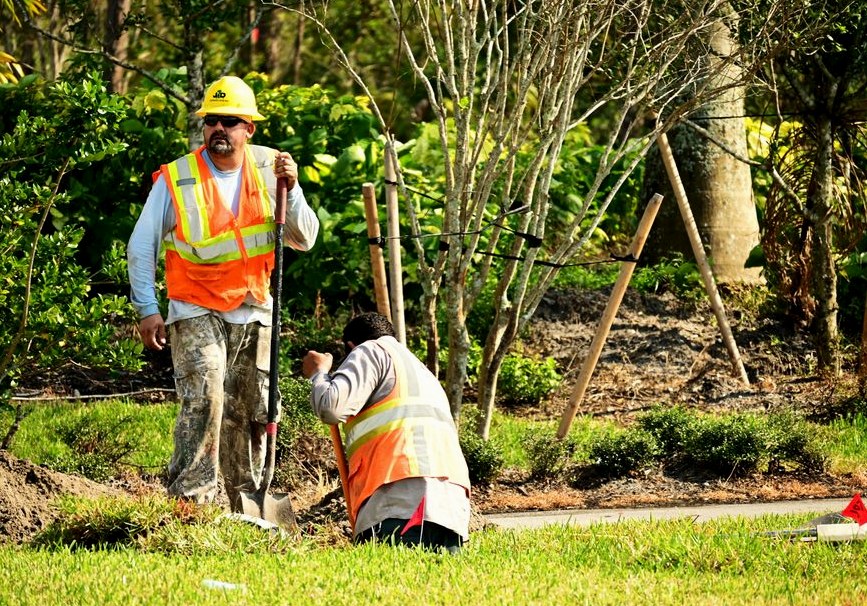
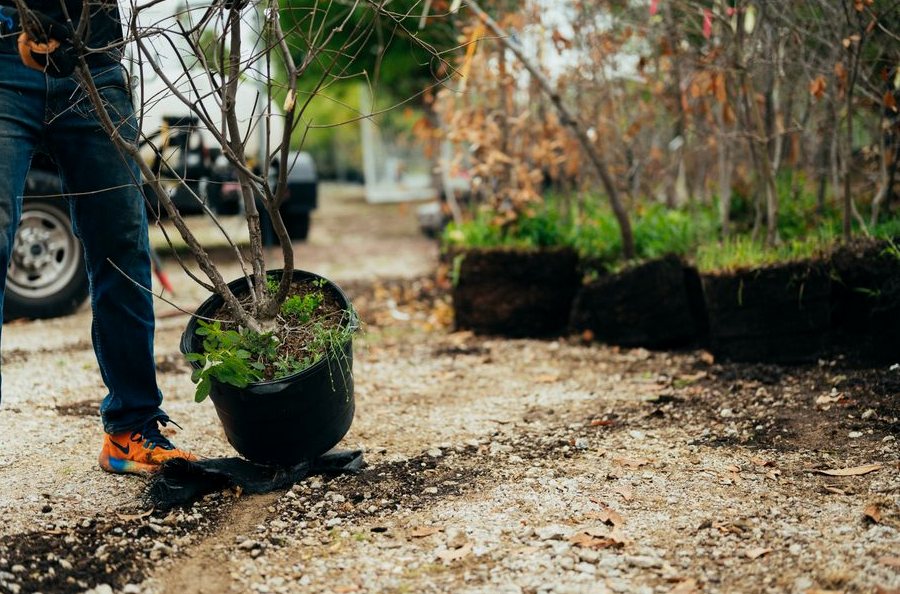
The root flare, where the trunk widens at the base, sits at or just above ground level. Planting deeper is the most common way to slowly kill a young tree. We backfill in layers and firm each one so the soil doesn't settle later and pull the trunk down with it. We mostly plant in the native soil, amended only where drainage needs help, because a rich pocket of amended soil in poor ground can hold water around the roots.
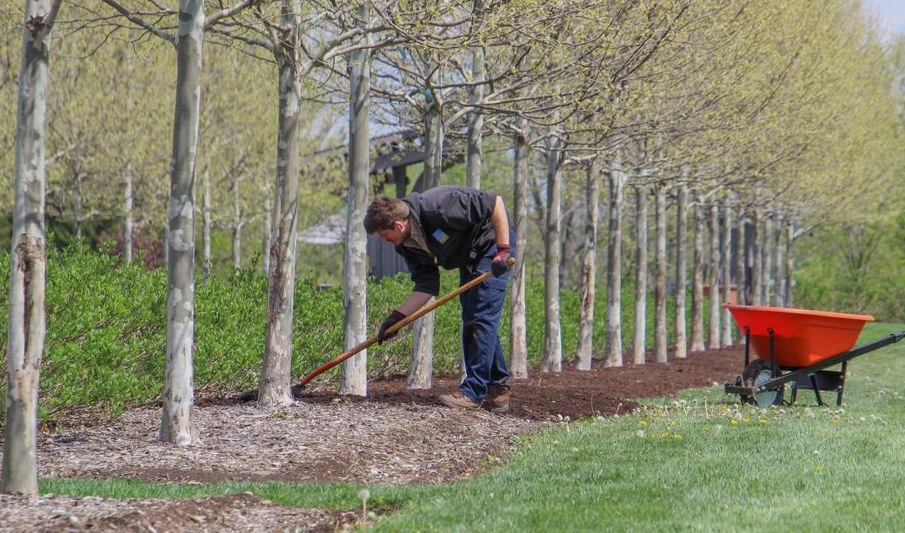
Mulch goes on in a wide ring over the root zone and stays off the trunk. A pile of mulch against the bark holds moisture there and invites rot.
On any job near overhead wires we hold to the same rules we use on removals. If anyone on the crew can't stay at least 10 feet from an electrical line, we call the utility to de-energize and ground it before work starts. Hard hats stay on, drop-zone cones go out when material moves overhead, and climbing and fall-protection gear gets inspected before use. Anything worn or damaged comes out of service.
The First Summers
A new tree lives on the water in its original root ball until the roots reach out into the surrounding soil. The first hot months matter most. We give you a watering schedule that fits the species and the season, and we tell you what to check. Make sure any stakes aren't cutting into the trunk. A tree that leafs out but puts on no new growth is telling you something is wrong at the roots.
Light structural pruning in the first few years sets how the tree grows for decades. It is far cheaper to do while the tree is small, so we plan for it up front.
What This Job Costs
Planting cost depends on the size and species of the tree and what the site needs before the tree goes in. We quote it after we've seen the spot, in writing, so you know the number before we start.
If an old stump is in the way, it has to be ground out first. Stump grinding runs $267 to $494 per stump, depending on diameter. Measure across the top of the stump at its widest point, and we can give you a closer figure over the phone.
If something under the surface changes the scope, we tell you before we do the extra work.
Get a Planting Quote
Tell us what you have: a cleared lot, a gap left by a removal, or a stump still in the ground. We'll come look at the spot, talk through the tree and the placement, and give you a written quote before anything gets planted.
See the Work
A visual look at what the service involves.

How It Works
-
Tell Us What You Need
Tell us what you need done and when — you'll get a straight answer, not a sales pitch.
-
We Walk the Job
We come out, look at the space, and confirm exactly what the job involves.
-
Know the Price First
You get the scope and the price in writing before any work starts. No surprises.
-
The Job, Done Right
We do the job right the first time, clean up after ourselves, and stand behind the work.
Depending on what we find, that can mean:
- Decide whether the job requires climbing, an aerial lift, or rigging, and assess whether the tree can safely withstand rigging forces.
- Brief the crew on hazards and establish communication between workers aloft and on the ground before rigging begins.
What It Typically Costs
Ranges to budget around - every situation is priced on its own specifics.
$200–$400
$100–$350
Our Service Area
We work across Hanford, CA. Call (559) 794-9788 to confirm coverage for your address.